Online multiplayer solved a real problem: how do you play with people who aren't in the same room? It did this well. Over roughly twenty years it became the dominant form of multiplayer gaming, pushed splitscreen off the shelf, and made local co-op a heritage mode that studios dropped to save resources.
Then the problem it had always had — the thing it was never actually designed to address — became more visible. Online multiplayer is good at connecting strangers. It was never good at being in the room with someone.
What online can't replace
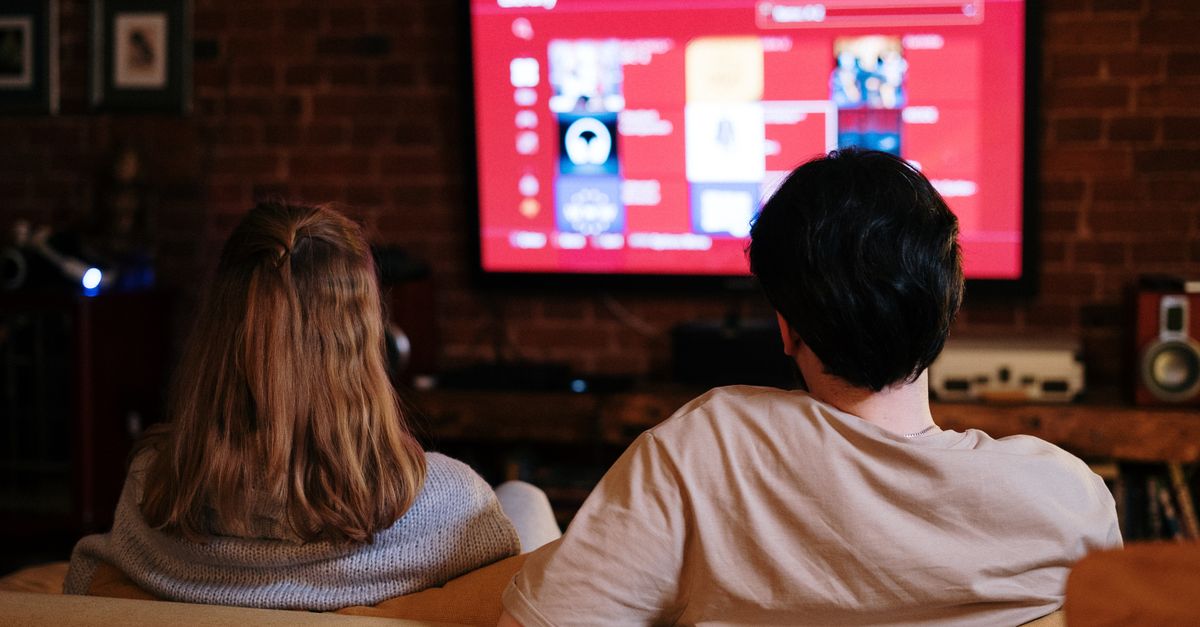
The specific thing couch co-op provides isn't hard to name: shared physical space, shared reaction, the ability to say something to the person next to you about what just happened on screen and have that conversation happen in real time, in your living room, with body language intact. Online voice chat is a functional approximation. It is not the same thing.
This seems obvious stated plainly, but it got obscured for a decade by the efficiency argument: online multiplayer gives you access to more players, broader matchmaking, persistent communities, ranked play. All true. None of it is what someone means when they say they want to play a game with their partner on a Saturday afternoon.
Those are different wants and they require different design responses. The games industry is reasonably good at spotting when a market want isn't being served and adjusting — unevenly, slowly, but eventually. What's been happening with couch co-op over the past several years is the eventual part.
The design problem it creates
Local co-op is harder to make than it looks, which is part of why it got dropped. You're designing for two people on one screen, which means camera systems built for one player have to split or widen or be rethought entirely. Progression systems designed to be individual need to either share or be separate but tracked simultaneously. Enemy AI scaled to one player needs rebalancing for two. Network code becomes local multiplayer code, which is a different set of constraints.
The games that have handled this best recently are ones that were designed for it from the ground up rather than having it bolted onto a single-player structure. When co-op is the premise rather than the feature, the camera assumptions change early, the difficulty scaling is calibrated for two from the first design pass, and the moments of shared failure — which are, honestly, where co-op games live — are planned for rather than stumbled into.
Who it's actually for
The demographic most served by good local co-op is people whose social lives have stabilised into something smaller and more proximate. Couples. Housemates. Parents playing with children who are old enough. People who have a friend over on a Friday.
These are not the people the industry spent the 2000s and 2010s designing for. The industry was designing for young men with disposable time and disposable income and persistent online communities. That audience still exists and is still large. But it was treated as the default when it was just the dominant one.
The demographic the industry underserved for a decade is now spending money on games that serve it. This is the market response, not the cultural one — though the cultural one, the feeling of playing a game with someone next to you, is what actually drives the purchase.